Why Retailers Need Subscription-Based Quick Commerce Solutions in 2026
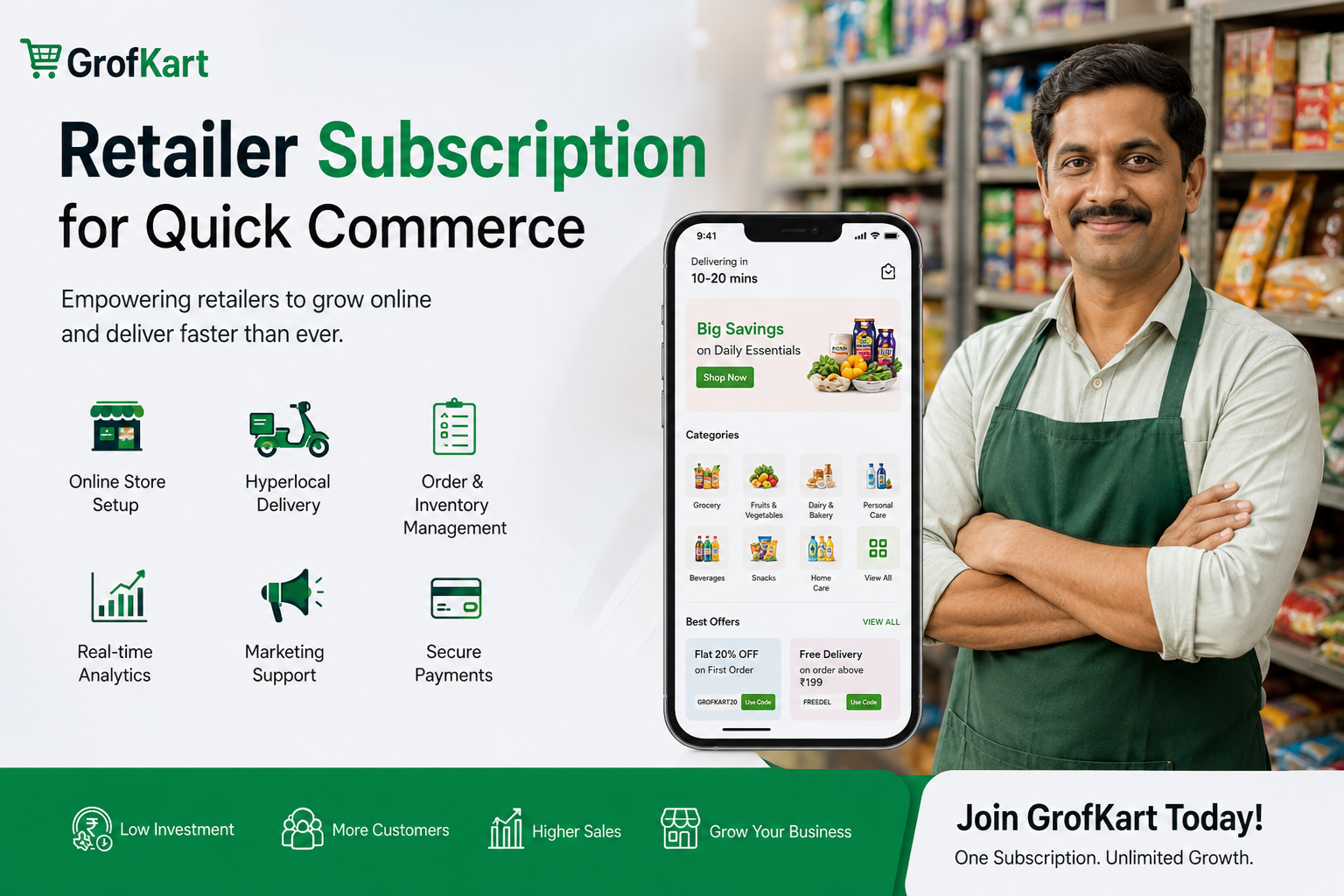
GrofKart empowers local retailers with quick commerce solutions, hyperlocal delivery, and smart order management to boost sales, expand customer reach, and grow digitally with low investment.
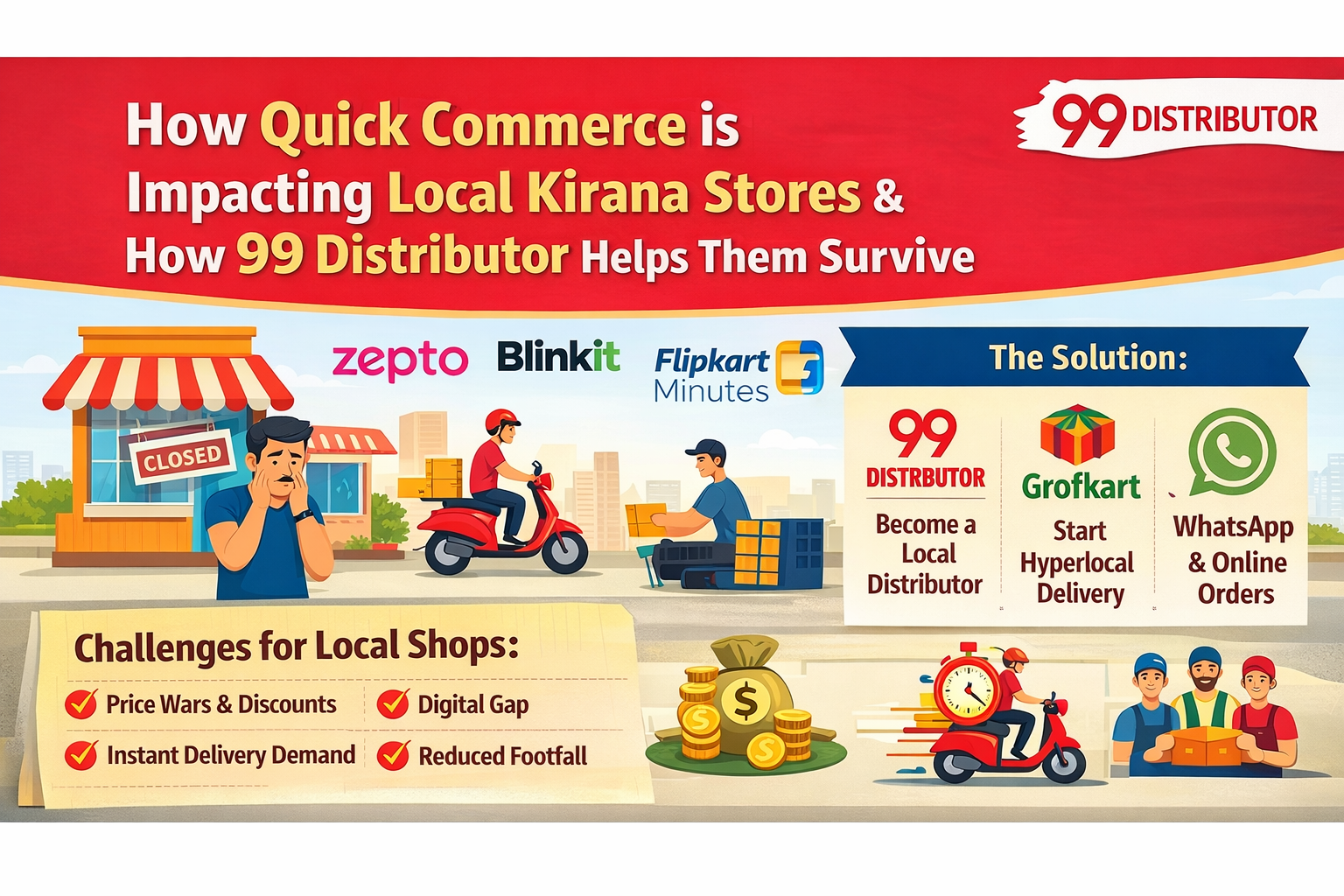
The retail industry is changing faster than ever. Customers no longer want to wait 2–3 days for deliveries. They expect groceries, cosmetics, medicines, electronics, and daily essentials within minutes. This shift has given rise to Quick Commerce (Q-Commerce) — the new age of hyperfast retail delivery.
Platforms like Blinkit, Zepto, and Swiggy Instamart have completely transformed consumer buying behavior in India. Today, convenience has become more important than price for urban consumers.
For retailers, this creates both a challenge and a massive opportunity.
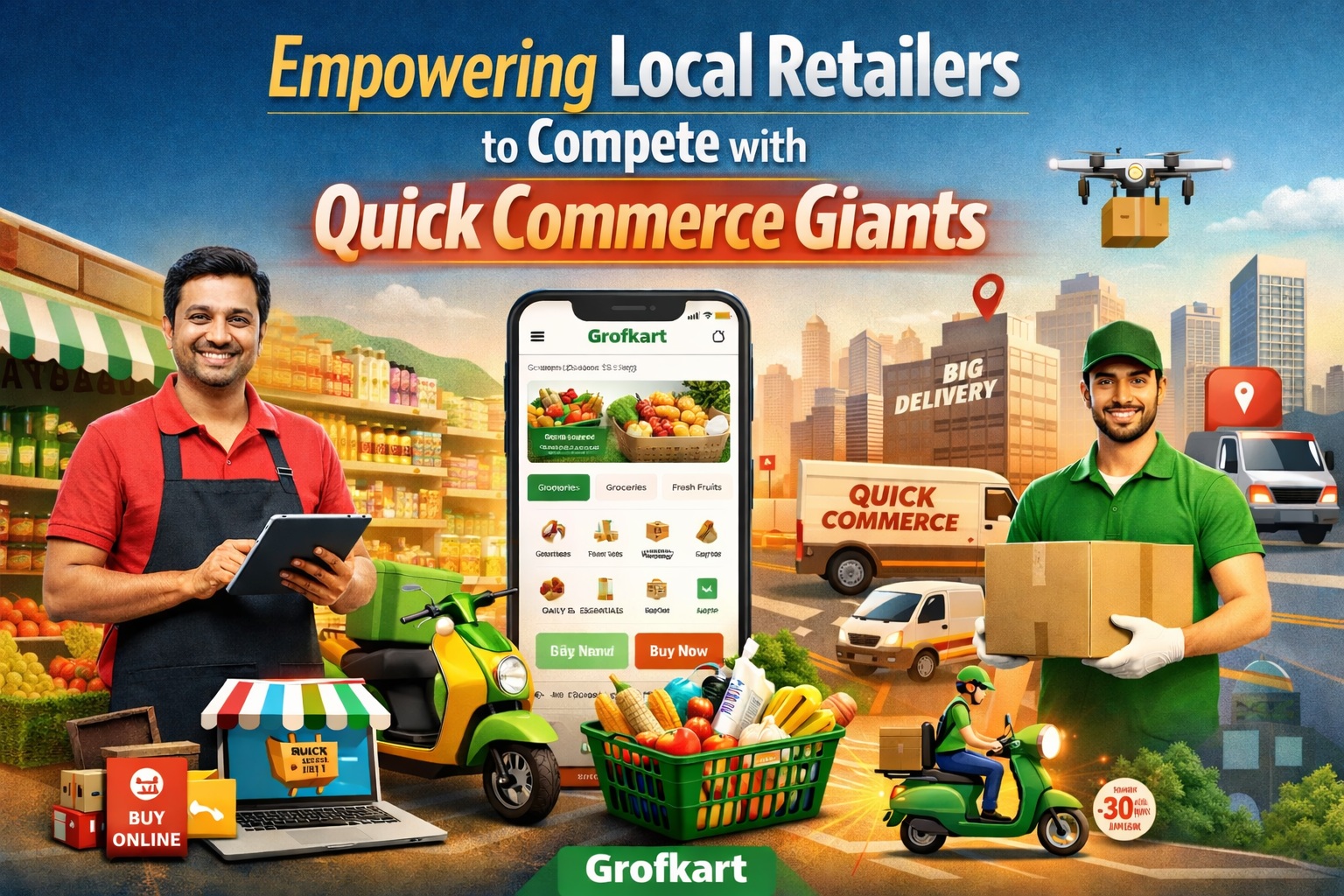
Instead of building expensive delivery infrastructure independently, retailers are now shifting toward subscription-based quick commerce platforms like GrofKart, where they can access technology, logistics, customer acquisition, and hyperlocal delivery under a single ecosystem.
What Is a Retailer Subscription Model in Quick Commerce?
A retailer subscription model allows local stores, supermarkets, kirana shops, pharmacies, and D2C brands to join a quick commerce platform by paying a fixed monthly or yearly subscription fee.
In return, retailers get:
- Online store setup
- Hyperlocal delivery support
- Order management system
- Inventory management
- App/dashboard access
- Customer reach expansion
- Digital marketing support
- Payment gateway integration
- Real-time analytics
- Delivery partner network
This model removes the biggest pain point for small and medium retailers — high operational investment.
Why Retailers Are Moving Toward Quick Commerce Subscriptions
1. Consumer Demand for Instant Delivery
Modern customers want products delivered in 10–30 minutes. The quick commerce industry in India is growing rapidly because of changing urban lifestyles and convenience-driven shopping behavior.
Retailers who cannot provide fast delivery risk losing customers to quick commerce giants.
With subscription-based platforms like GrofKart, even local retailers can compete with larger players.
2. Low Investment, High Market Access
Building a delivery app, hiring riders, managing inventory systems, and handling customer support independently can cost lakhs of rupees.
A subscription model reduces this burden significantly.
Instead of investing heavily in:
- Technology
- Logistics
- Delivery fleet
- Mobile app development
- Marketing
Retailers simply subscribe and start selling instantly.
This helps kirana stores and SMEs digitize quickly.
3. Better Inventory Movement
Quick commerce platforms help retailers increase inventory turnover through real-time demand.
Popular products move faster because:
- Orders are hyperlocal
- Customers order frequently
- Convenience increases repeat purchases
Platforms are increasingly focusing on improving basket size and repeat order behavior to improve retailer profitability.
4. Increased Customer Retention
Subscription ecosystems help retailers maintain loyal customers through:
- Membership rewards
- Faster deliveries
- Personalized offers
- Cashback programs
- Scheduled deliveries
Consumers today prefer convenience and reliability over traditional shopping experiences.
5. Technology Without Technical Complexity
Most local retailers struggle with:
- App management
- Inventory syncing
- Digital marketing
- Data analytics
- Order tracking
Subscription-based quick commerce platforms simplify all of this through centralized systems.
Retailers can focus on sales while the platform handles operations.
How GrofKart Can Empower Retailers
GrofKart can become a strong enabler for retailers by offering:
Hyperlocal Delivery Network
Fast deliveries within nearby locations using optimized delivery routing.
Retailer Dashboard
Easy inventory updates, sales tracking, and order management.
Subscription Plans
Flexible monthly or yearly plans for:
- Kirana stores
- Pharmacies
- Cosmetics retailers
- FMCG stores
- Electronics shops
- Fresh produce sellers
Marketing & Visibility
Helping retailers gain online exposure through:
- Featured listings
- Push notifications
- Local promotions
- Festival campaigns
AI-Based Demand Insights
Smart analytics to help retailers stock products according to local demand trends.
Challenges Retailers Face in Quick Commerce
While quick commerce is growing rapidly, retailers must also understand the operational realities.
Industry reports suggest challenges include:
- Thin profit margins
- Delivery costs
- Heavy competition
- Inventory wastage
- Discount pressure
This is why subscription-based ecosystems are becoming important — they distribute operational costs across multiple retailers and create scalable infrastructure.
The Future of Retail Is Hybrid
The future retail model is no longer purely offline or online.
It is:
Offline + Digital + Instant Delivery
Retailers who adopt quick commerce early will gain:
- Faster market reach
- Better customer engagement
- Higher order frequency
- Stronger brand visibility
- Long-term scalability
Quick commerce is no longer limited to groceries. It now includes:
- Cosmetics
- Medicines
- Electronics
- Fashion accessories
- Pet supplies
- Daily essentials
Final Thoughts
The rise of quick commerce is rewriting the rules of retail in India.
Retailers who adapt to subscription-based quick commerce ecosystems like GrofKart can unlock:
- Digital transformation
- Faster deliveries
- Better customer retention
- Increased sales
- Lower operational burden
In the coming years, success in retail will depend not only on product quality or pricing — but also on speed, convenience, and customer experience.
And that is exactly where subscription-based quick commerce platforms are becoming the future of retail.